|
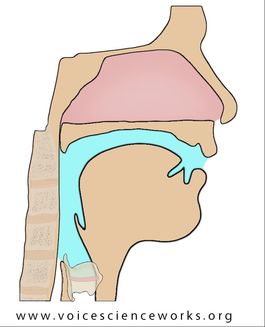
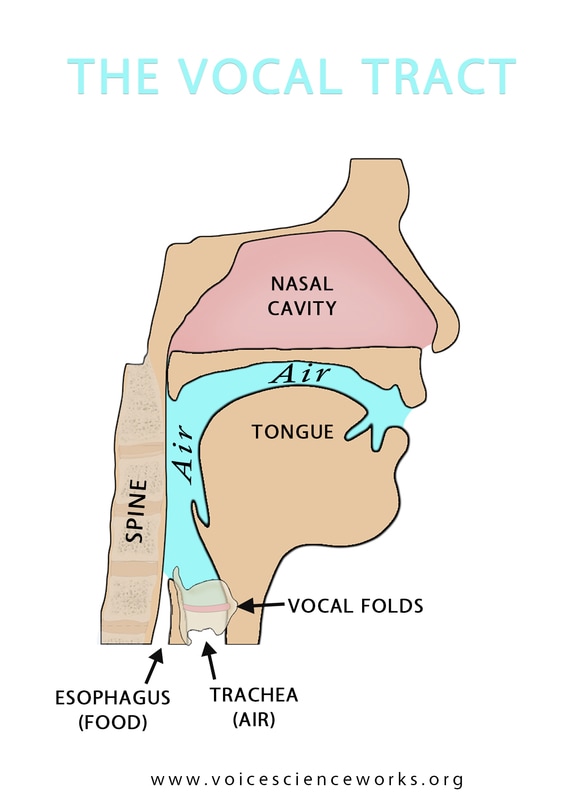
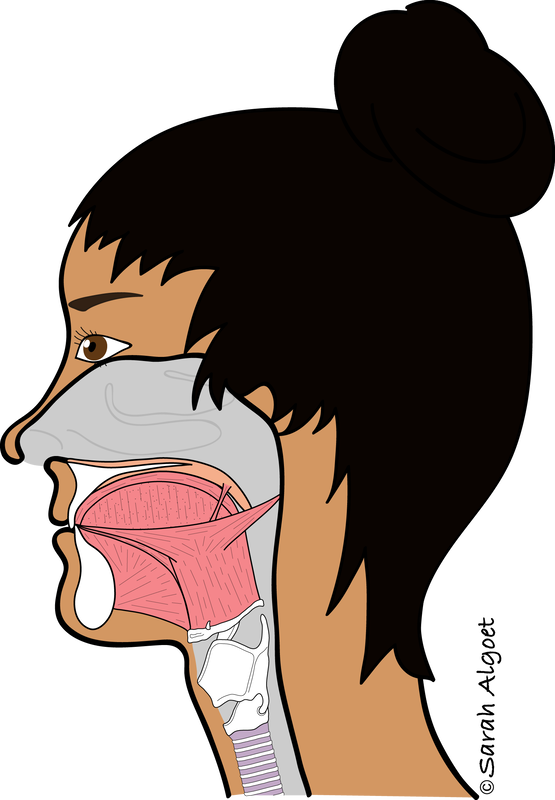
The vocal tract is a container of air that starts from the top of the vocal folds and goes all the way to the edge of the lips. The average length of a vocal tract for males is about 17 cm and 14 cm for females. |
|
Here are some more labels to get you acquainted. Notice that the vocal tract can feed into the esophagus, when swallowing food and liquids, or into the trachea for breathing in and out.
During swallowing the larynx is squeezed upwards to make room for food passing down into the esophagus behind it. We'll talk about how this reflex relates to singing a little later. The vocal tract acts as a resonator (resonate= to re-sound) and a filter for all parts of the sound created by the vocal folds. |
|
|
|
All sounds created by the vocal folds must pass through the vocal tract before we can hear them. We never hear the vocal folds raw sound on its own.
Except --- in this cool video. Scientists created vocal fold simulators and added different vocal tract shapes on top of the simulator to see the effect on the sound. The vocal folds on their own sound like an unintelligible buzz-tone, making us realize how crucial the filter/resonator is to making our sound beautiful and understandable. |

Almost every instrument has a resonator. Any container of air that amplifies part of the vibrations counts. The voice has the most unique resonator because it can actively change shape.
The air inside the body of the guitar acts as a resonator for the vibrating strings. Once the guitar is built, the resonator's shape is fixed, unlike the vocal tract.
The air inside the body of the guitar acts as a resonator for the vibrating strings. Once the guitar is built, the resonator's shape is fixed, unlike the vocal tract.
|
Vertical Divider
|
There are so many muscle groups that can change the size and shape of the vocal tract.
Some muscle groups make the vocal tract longer, shorter, give it a wider opening, or firm up its walls. Every time the size and shape change anywhere along the container of air, the change has a drastic effect on what parts of the original sound are amplified or filtered out. |
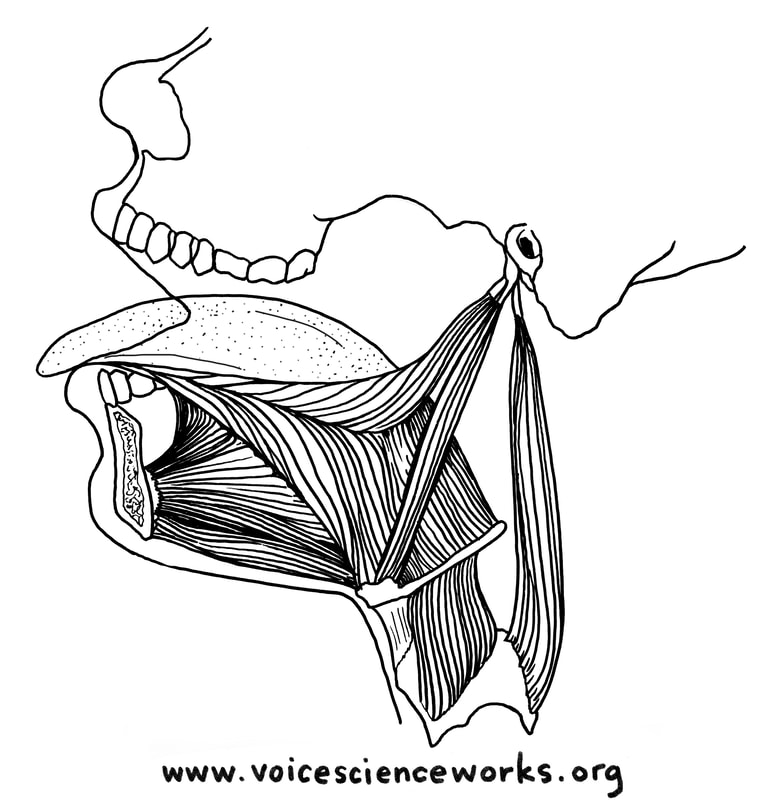
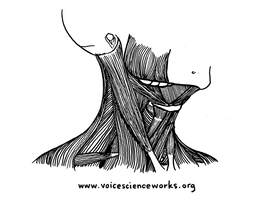
how we adjust the vocal tract
For each part of the vocal tract we'll talk about ~
1.How it moves
2. How this affects the size and shape of the vocal tract
3. How that size and shape affects the overall sound output, or the "pitch of the air" in the vocal tract
(This can be a confusing concept, see our Harmonics vs. Formants page for a full explanation)
4. How you can feel this part of the vocal tract (or rather, if you can feel it)
5. Exercises to try
1.How it moves
2. How this affects the size and shape of the vocal tract
3. How that size and shape affects the overall sound output, or the "pitch of the air" in the vocal tract
(This can be a confusing concept, see our Harmonics vs. Formants page for a full explanation)
4. How you can feel this part of the vocal tract (or rather, if you can feel it)
5. Exercises to try
lips
|
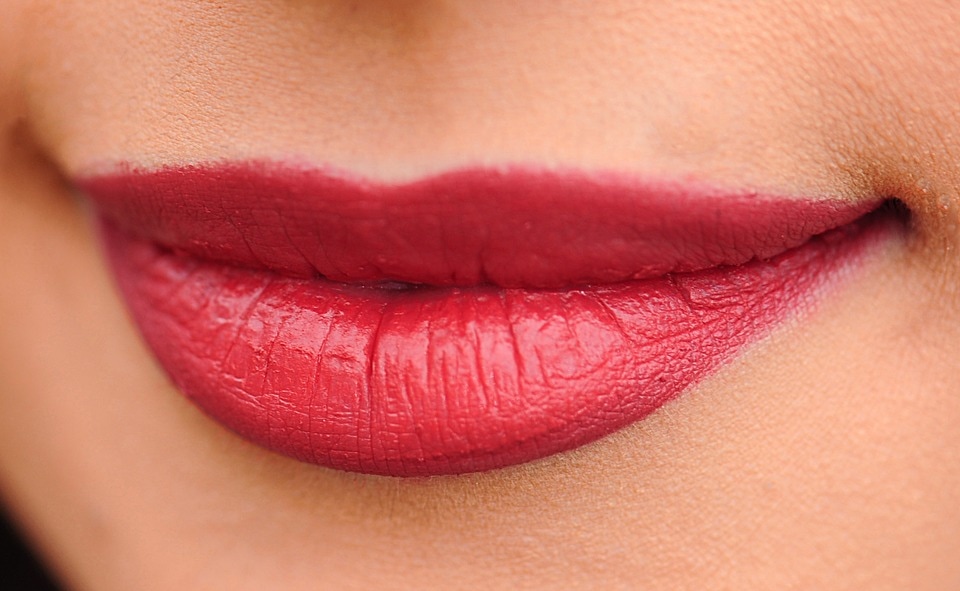
The lips are moved by a circular muscle group that descends half way down the chin and all the way up to the nose. They can also be moved by muslces inside the cheeks (the buccinator muscles)
If the lips come forward (like for the spoken vowel /o/) the vocal tract becomes longer. The pitch of the air in the vocal tract will be lower and the overall sound may be perceived as darker. If the lips spread (like in a smile) the vocal tract becomes shorter. The pitch of the air in the vocal tract will be higher and overall sound may be perceived as brighter. The lips can also suck in and cover the teeth. This action is usually associated with some form of tension farther down the vocal tract. A narrow embouchure (or mouth shape) made by the lips can have acoustic benefits similar to SOVT exercises (see SOVT page for more information). The lips are easy to key into because you can touch and see them. Use a mirror to check out what they're doing. If you're interested in more forward lips for perhaps a darker sound, try putting a finger out in front of you and see if your lips can gently touch it while singing different sounds. Almost like trying to fog up a window. For clearer consonant articulation, gently put two fingers between your cheeks to bring the lips forward. The muscle groups surrounding the lips will have to work harder and more efficiently. |
|
tongue
|
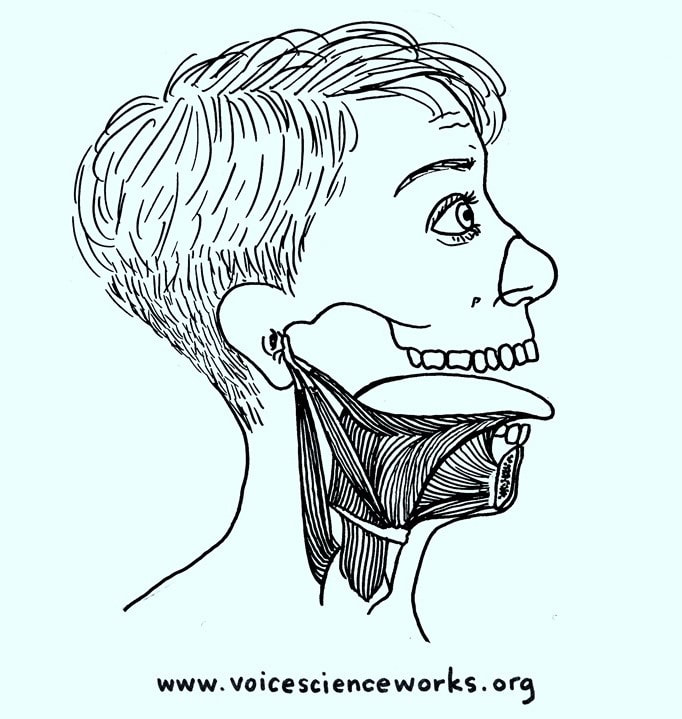
The tongue is arguably one of the most instrumental articulators in the vocal tract. If all other articulators are held still besides the tongue, most vowels and consonants are still intelligible.
The tongue comprised of 8 different muscles, is one of the strongest muscles in the body, and one of the more complex parts of the vocal mechanism. It is situated at the bass of the chin, so a resting tongue is a forward tongue. The hump of the tongue plays a strong role in determining which harmonics are accentuated, and therefore which vowel we perceive. The tongue’s size and position in the mouth is hard to perceive. You may be able to feel where the tip of it hits your teeth but there is so much more to the tongue’s mass than we can see and directly feel. Physical effects on our sound: If the tongue is retracted and the muscles by the hyoid bone are contracted, it can contract the space around the larynx, making free vibration impossible for the larynx. Acoustic effects: If the tongue is forward, the space behind the tongue is large and the space in front of it is small. This can be a perfect acoustic combination for many singing styles. A high tongue hump has a huge acoustical benefit as well (shaped like a slide like for the consonant cluster ‘Nngg’=[N]). This shape can help focus the energy on what harmonics are highlighted, bringing more clarity to the sound. Exercises to try: Use a mirror to see if the tip of the tongue is resting at the bottom teeth. This will likely encourage less crowding in the back. Nnnngggg-- Aaahhh=[N]-[a] Use the high tongue hump of the Nnngg consonant cluster to inform a high fluffy tongue for other vowels like [a], which can often have a pulled back, flat tongue in the back Tongue thrusts – Get your tongue all the way out of your mouth like a big cat yawn. Sing with your tongue falling over the bottom teeth and notice if it wants to pull back. |
|
pharynx
|
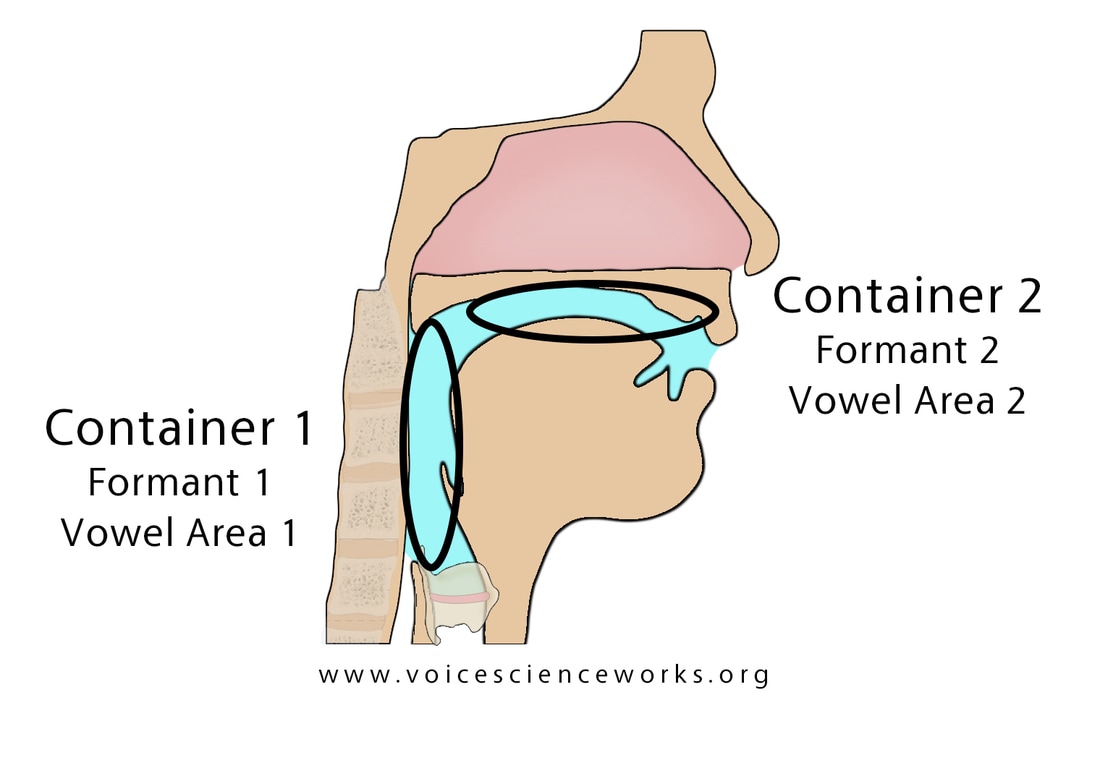
The pharynx, commonly called the throat, is the space behind the tongue, oral cavity and nasal cavity, and above the larynx and esophagus. When talking about acoustics we refer to this area as 'Container 1' or 'Vowel Area 1'. The size of it relates directly to the frequency of 'Formant 1'. See Harmonics vs. Formants page for more information.
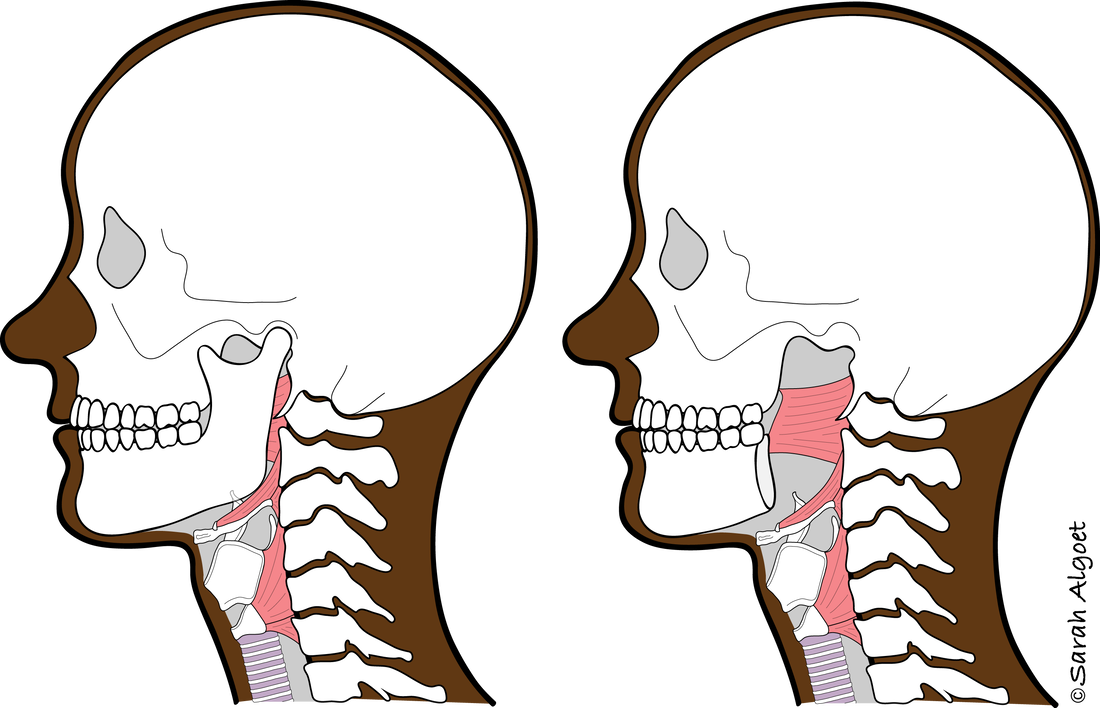
The size of the pharynx is mostly altered by a series of constrictor muscles. (Although it also changes size based on tongue and larynx heights). These pharyngeal constrictor muscles can only do one thing – constrict. Which tells us the pharynx is as large as it can get when it is at rest or in a neutral state. The spine makes up the back wall of the pharynx so it is physically impossible to make any more ‘space’ in the back than is already there. During swallowing, the pharynx narrows and constricts and pushes the larynx upwards so that food can slide down the esophagus. So much of singing coordination is about contradicting this reflex. The narrowing and squeezing of the pharynx, like in swallowing, is often what singers describe as a tight and pinched feeling. When the pharynx is open (or not-constricted like for swallowing), the vocal tract will be larger and the pitch of the air will be lower and the overall sound may be perceived as darker. If the pharynx is constricted, the vocal tract will be smaller and the pitch of the air will be higher, and the overall sound may be perceived as brighter. If the shape of the pharynx changes frequently throughout singing, the acoustic information feeding back to the vocal folds will be haphazard and force the vocal folds to put in fatiguing work. Much of singing coordination is about training a stable shape in the pharynx. Can you feel it? The pharynx is deep enough inside the body that is difficult to have a direct sensation of it. When a strong sensation in the pharynx occurs it is often from tension or a muscle getting tired. Often times when people try to feel it ‘open’, they mis-map the sensation and end up pulling the tongue back. When the pharynx is neutral and the most open and released it can be, singers often describe a feeling of ‘nothingness’ or ‘emptiness’. Exercises to try: Drink a glass of air - Imagine you are holding a glass of water, bring it up to your lips and notice any sense of release behind the tongue. Imagine the beginning of a smirk or polite yawn. Ken Bozeman's Kinesthetic Voice Pedagogy explores these concepts further. |
|
larynx
|
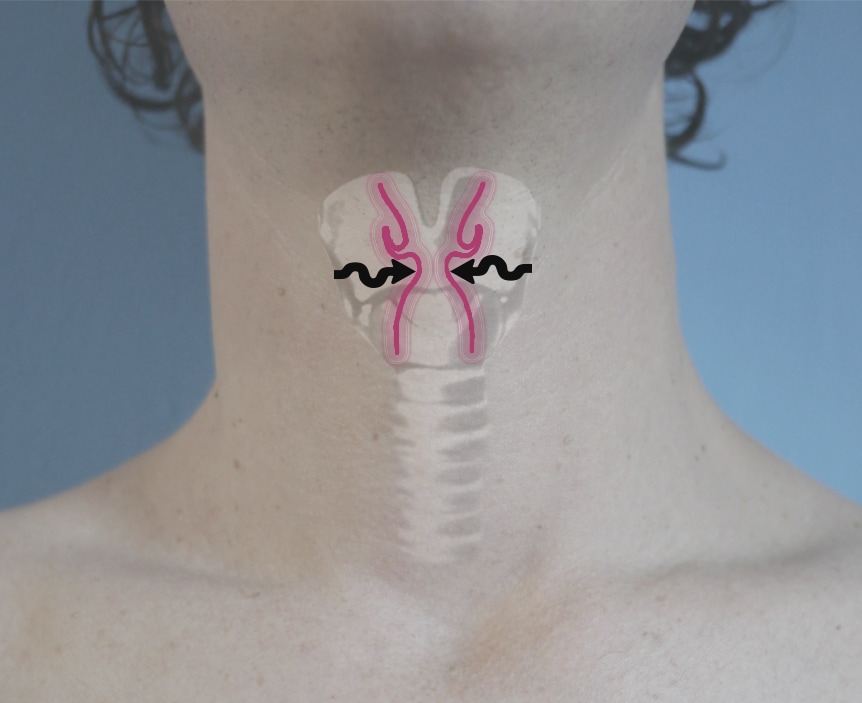
The larynx is a series of cartilages that sits on top of the trachea, or the windpipe. The vocal folds, the vibrating part of our instrument, are housed inside. The larynx is attached to one bone, the hyoid bone, which is the only floating bone in the body. It is therefore a very mobile structure.
There are muscles above the larynx that move the larynx upward (suprahyoid) and muscles below the larynx that move the larynx downward (infrahyoid). When the larynx is pulled down (as in yawning) the vocal tract becomes longer. This creates a lower pitch of the air (lower formant frequencies). When the larynx is pulled up (as for swallowing) the vocal tract becomes shorter. This creates a higher pitch of the air (higher formant frequencies). It seems that most instructors are able to agree on the following in regards to larynx height: -Excess raising or lowering of the larynx impedes free vibrations coming from the larynx. -The larynx should not raise so high that the space around it is crunched in on by the tongue, the false folds or extrinsic muscles and discomfort is felt. -Whatever height the larynx is at, stability in that height is acoustically ideal. A sudden leap in the larynx when going higher in the range will give uneven feedback to the vocal folds. However, instructions that assume one has micro-control over larynx position are usually tension inducing “Keep the larynx completely still” “Tilt the larynx 40 degrees” etc. Can you feel it? We cannot feel the muscles inside the larynx or the vocal folds themselves. We can feel the muscles that move the larynx up and down, especially if they get tired or are held too long. Exercises to try: Exercises that encourage the pharynx not to narrow will also encourage the larynx to remain neutral, or not-raised. Pharynx narrowing and larynx raising are part of the same swallowing reflex – the larynx raises because the pharynx squeezes in and pushes it up. Imagine being surprised by some good news and making a silent gasp. For stability in larynx height from low to high notes, breathe in the shape of the top note. Being prepared for it early in the breath will help avoid a sudden leap. |
|
jaw
|
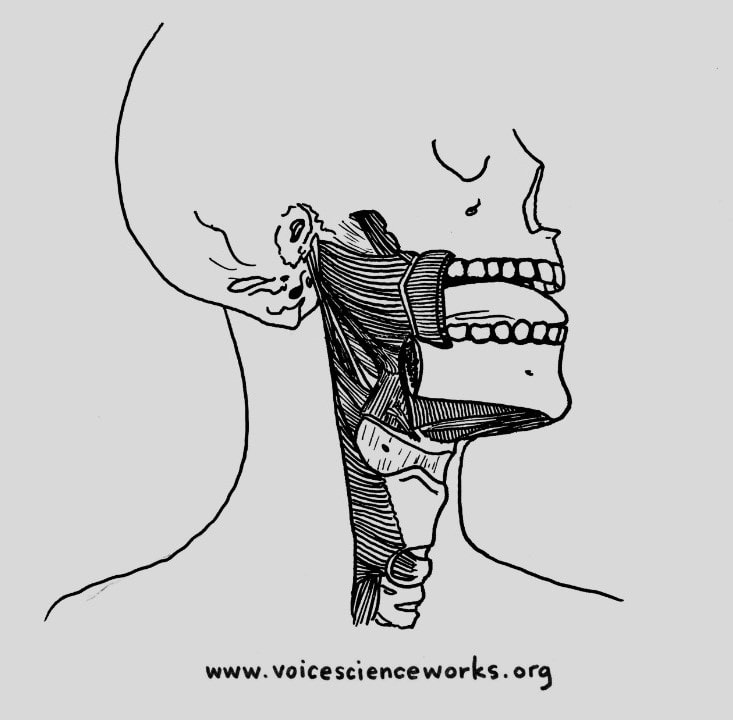
Training the jaw to relax and lower an appropriate amount has a lot to do with centering the body. When the body is off center, the jaw muscles often engage to compensate. We recommend that you explore the jaw muscles through self massage, to get a sense of where they are and how tight they are, and then through the centering exercises found on our Breath page.
Figuring out how to drop the jaw without engaging the chewing muscle (or the masseter muscle) is a huge coordination in singing. Bring your teeth together and bite down and notice the bulge in the back of your cheeks. That’s the masseter muscle. It has a huge job for breaking down our food, but is less helpful when it comes to letting go for singing. If this muscle is engaged when the jaw is dropped to make sound the larynx may get tight as well. An easy, inward cheek smile can help to free the masseter, much like the one that Mona Lisa has. Is it the jaw…or the tongue? Often times tongue tension contributes to a held jaw and chewing muscles wanting to play. Getting the tongue forward, even out of the mouth can help free it up. Acoustically – when the jaw is more dropped, the vocal tract is shorter, has a wider opening and the pitch of the air is higher (the formants raise). When the jaw is more closed, the vocal tract is longer, has a more narrow opening, and the pitch of the air is lower (the formants lower) For physiological reasons (releasing the masseter muscle), the jaw needs to at least be open enough so that the back teeth don’t touch. Adjustments from there relate directly to acoustic choices and what harmonics a singer would like to boost in their range. Can you feel it? Most people can feel jaw tension accumulate over time, but even chronic tension can start to feel ‘normal’. When it’s dropped and released, most people describe a sense of nothingness, ease and lack of sensation. Exercises: Muscles respond better to touch than to words. Massage circles coming towards your lips on the masseter muscle. Jaw independence-notice with a mirror or a hand on your face if when the pitch changes your jaw makes a sudden movement, like chewing. If the jaw cannot move independently of the vowel or pitch, this can be a sign the larynx is tight and held. |

Try looking at Mona Lisa, focusing on a centered breath, and asking your body to mirror her facial expression. Do you notice a lifted feeling in your cheeks, and a slight release in your jaw?
|
soft palate
|
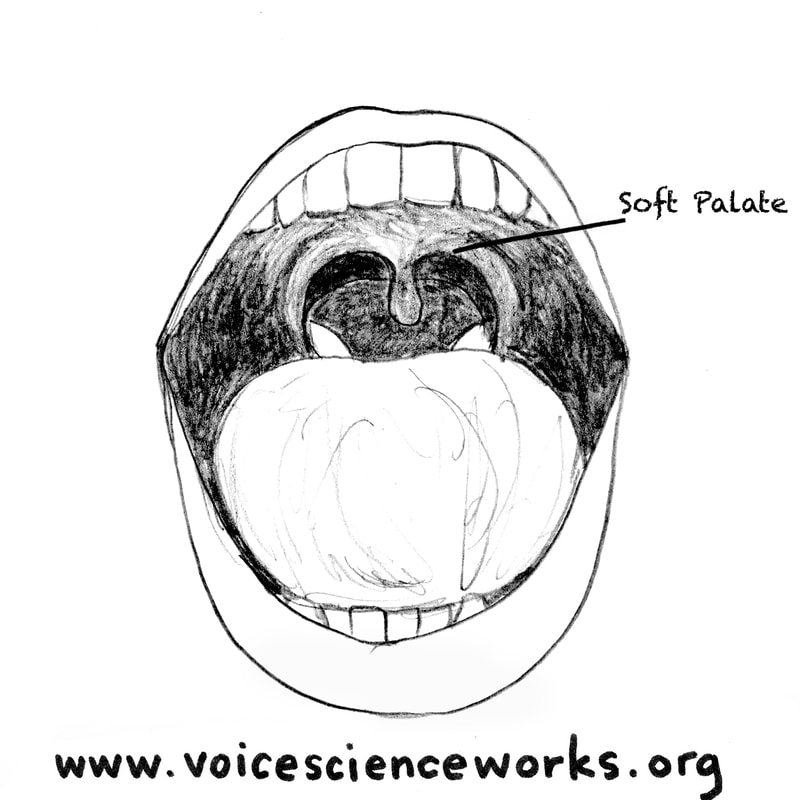
The soft palate is a portal to the nasal cavity. You can feel where it begins by running your finger or tongue along the roof of your mouth. Where the bony hard structure stops (the hard palate) and the soft tissue begins is the soft palate.
There are several muscle groups that raise and lower it. Muscles that raise it will also raise the larynx. Muscles that lower it are usually accompanied by a lowered and flatter tongue. During swallowing it naturally raises to keep food and liquids out of the nasal cavity. During speech it moves up and down freely to create different vowels and consonants. Nasal consonants like /m/ and /n/ require that it lower so that sound gets filtered by the nose. If it is raised, acoustic information stays in the pharynx and oral cavity. If it lowers, acoustic information is dampened by the wet nasal cavity resonator. The nasal cavity is not considered a ‘viable resonator’ when it comes to creating maximum volume (see Resonance page). Sending sound through the nose (lowered soft palate) can feel great to the singer because of the amount of feedback that occurs. Many singers will start their warm ups with sound like /m/ and /n/ because of the SOVT benefits (see SOVT page for more info). The sensation of lifting the soft palate can be depended on heavily in voice instruction, but can create misleading results. So many different sensations and muscle interactions happen around the soft palate, and it's hard to feel the soft palate by itself. Often times instructions that ask for ‘lift’ in the face or a ‘raise of the cheekbones’ don’t actually raise the soft palate – but can have an impact on the sound. This may have more to do with the effect of wall density in a resonator, see below. Can you feel it? The soft palate moving is a very subtle, almost absent, sensation. People often mis-map it for the sensation of the tongue pulling back, in an effort to create more ‘space’. Go back and forth between an /m/ and a /b/ sound. During /m/ the soft palate is lowered, during /b/ the soft palate is raised. Feel the difference? It is verrrry subtle. You can always tell if the soft palate is raised by plugging your nose. If the sound changes or you feel a strong presence with the nose plugged, the soft palate is lowered and sound is escaping through the nose cavity. Find out more on our Soft Palate page. |
|
other cool things
The vocal tract is made up of lots of pockets of air
If we think of the vocal tract as a column of air, we actually learn that it is hundreds of air columns stacked on top of one another, each of them with their own individual pitch. That’s how complex our instrument is. Here are some ways people brake it down--
If we think of the vocal tract as a column of air, we actually learn that it is hundreds of air columns stacked on top of one another, each of them with their own individual pitch. That’s how complex our instrument is. Here are some ways people brake it down--
|
|
Several of the smaller pockets of air in the vocal tract, one of them directly above the vocal folds, account for the upper formants, F3, F4, F5 ( commonly labeled the “Singer’s Formant”). These can bring out the ‘ring’ or ‘twang’ in someone’s sound (See Ring/Ping/Twang page for more info)
Density of walls also affects the sound
The density of the walls of a resonator also determine the frequencies that are brought out of the sound. If the walls are soft, the energy will be spread out over many frequencies. If the walls are harder, more energy will be given to a few frequencies. (The official concept is called Formant bandwidth). When the muscles around the vocal tract are flexed, there are harder walls on the resonator. This is partly why more ‘lift’ or tonus in the face can bring some clarity to the sound and relaxing muscles in the tongue and pharyngeal wall can bring warmth or richness to the sound.
The density of the walls of a resonator also determine the frequencies that are brought out of the sound. If the walls are soft, the energy will be spread out over many frequencies. If the walls are harder, more energy will be given to a few frequencies. (The official concept is called Formant bandwidth). When the muscles around the vocal tract are flexed, there are harder walls on the resonator. This is partly why more ‘lift’ or tonus in the face can bring some clarity to the sound and relaxing muscles in the tongue and pharyngeal wall can bring warmth or richness to the sound.
It's wet and squishy in there
We have a unique resonator compared to other instruments for a lot of reasons – one being that ours is wet and spongy inside. This can also affect the pitch of the air inside the vocal tract.
We have a unique resonator compared to other instruments for a lot of reasons – one being that ours is wet and spongy inside. This can also affect the pitch of the air inside the vocal tract.
EVERYTHING feeds back to the vocal folds
If the vocal tract is creating a shape so that the pitch of the air boosts the pitch being sung, the vocal folds can work much more efficiently. The vocal tract can boost the sound or fight the sound, both drastically effect the vibrations that the vocal folds are able to create. The vocal tract can also try to overcompensate for the vocal folds by using muscles of the neck and pharynx to try to squeeze the vocal folds together if they’re not coming together enough. It is important to coordinate the tiny muscles inside the larynx to do this job instead to avoid fatigue and tension (See Inside the Larynx)
If the vocal tract is creating a shape so that the pitch of the air boosts the pitch being sung, the vocal folds can work much more efficiently. The vocal tract can boost the sound or fight the sound, both drastically effect the vibrations that the vocal folds are able to create. The vocal tract can also try to overcompensate for the vocal folds by using muscles of the neck and pharynx to try to squeeze the vocal folds together if they’re not coming together enough. It is important to coordinate the tiny muscles inside the larynx to do this job instead to avoid fatigue and tension (See Inside the Larynx)
Tiny physical adjustments make huge acoustical differences
Millimeter movement of the tongue, slight spread of the lips and a whole new sound is created with a different acoustic signature. It makes the coordination process a very fine-tune learning experience – but, it also means we have so many options for the sounds we want to make! – with just the tiniest of adjustments :)
Millimeter movement of the tongue, slight spread of the lips and a whole new sound is created with a different acoustic signature. It makes the coordination process a very fine-tune learning experience – but, it also means we have so many options for the sounds we want to make! – with just the tiniest of adjustments :)
Want to learn more?
There's lots more to learn!
There's lots more to learn!
Your Voice: An Inside View - Scott McCoy
|
What Every Singer Needs to Know About the Body - Melissa Malde, MaryJean Allen, Kurt-Alexander Zeller
|
|